
RTPs’ threat to cards is real, driven by regulation. But questions need answering.
In the first of a series on the growth of real-time payments, Grace McNicholas looks at how regulation has driven recent RTP growth – and how reports of rising fraud on RTP networks are clouding the picture.
Is it time for Visa and Mastercard to pack their bags? That time might come, but questions that need answering before A2A payments can be said to have taken over in the UK, Europe, and US.
In the UK, Open Banking hit more than 40 million monthly payments and 19 million active user connections by June 2026 — up from 31 million monthly payments in March 2025.1 Meanwhile, countries such as Brazil and India are already seeing cards play second fiddle to A2A and wallet payments, with India’s UPI constituting 85% of the country’s digital retail volume.2
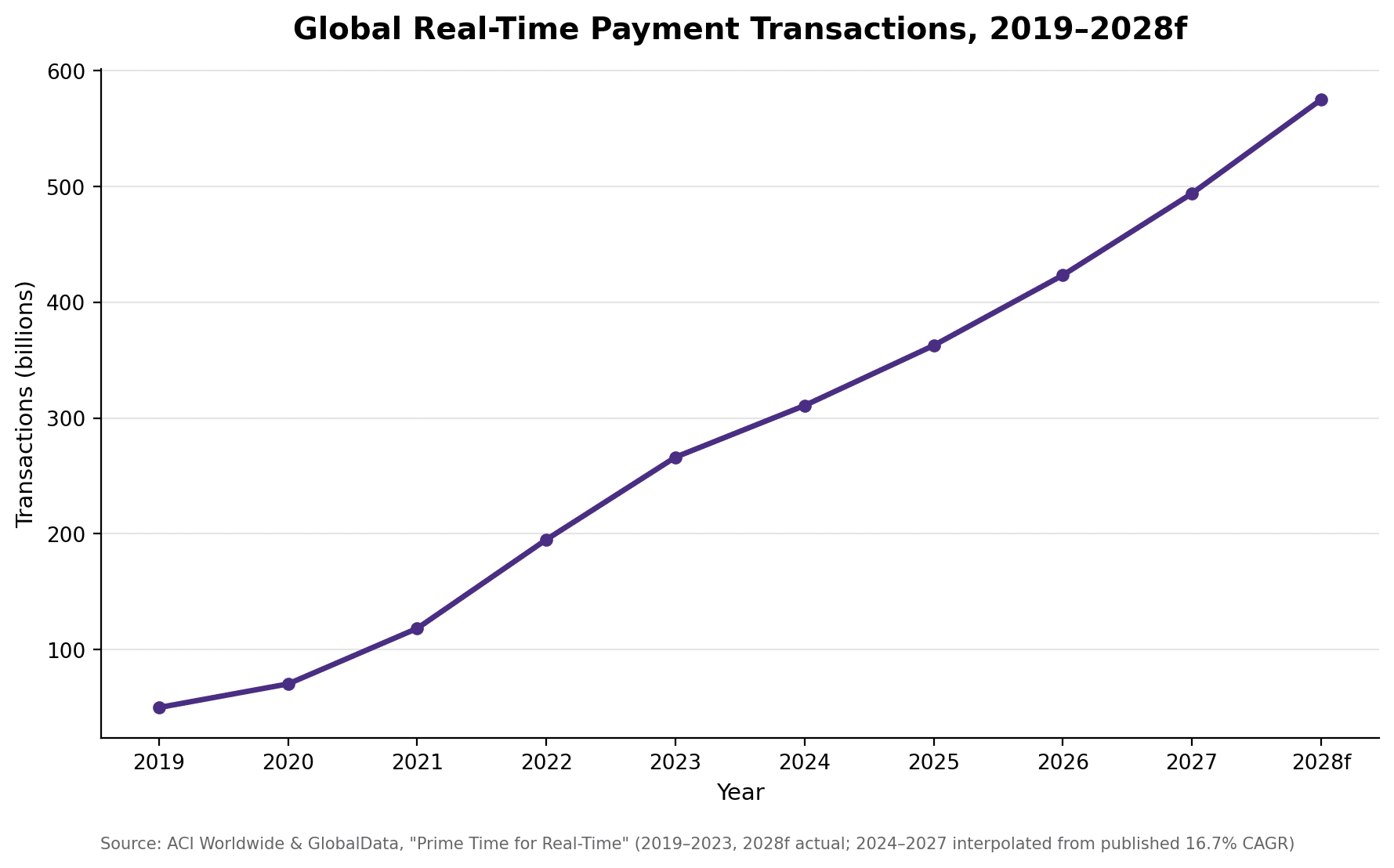
Calling card?
The success of Brazil’s Pix and India’s UPI cannot be attributed solely to market appetite for A2A as a payment form. Pix’s scale is a direct result of the BCB (Brazil’s Central Bank) mandate that financial institutions with more than 500,000 customers must offer Pix.
Furthermore, the BCB has mandated open APIs to help deliver a more modern UX and enforced zero-cost P2P transactions. That last point alone makes A2A transactions immediately more popular than cards from a merchant point of view.
UPI’s story is yet more stark. Starting with a zero-MDR mandate in January of 2020, the RBI (Reserve Bank of India) mandated that the Merchant Discount Rate on UPI had to be set to zero.
Section 269SU, part of the Income Tax Act, followed, mandating that businesses with a turnover exceeding ₹50 crore were to provide electronic payment modes, with non-compliance triggering a penalty of ₹5000/day. A government-operated direct subsidy was introduced to compensate the ecosystem for the revenue that MDR would have provided.
Free and frictionless UPI was policy manufactured, just like Pix, so A2A’s biggest wins so far are based on regulatory decree, not consumer choice.
The dark (fraud) side.
UPI reported fraud losses have roughly tripled in three years; one in five families with a UPI user has experienced fraud at least once in the last three years; and, of those victims, 51% never filed any official complaint, suggesting the official fraud numbers are just the tip of an ocean-going iceberg.3
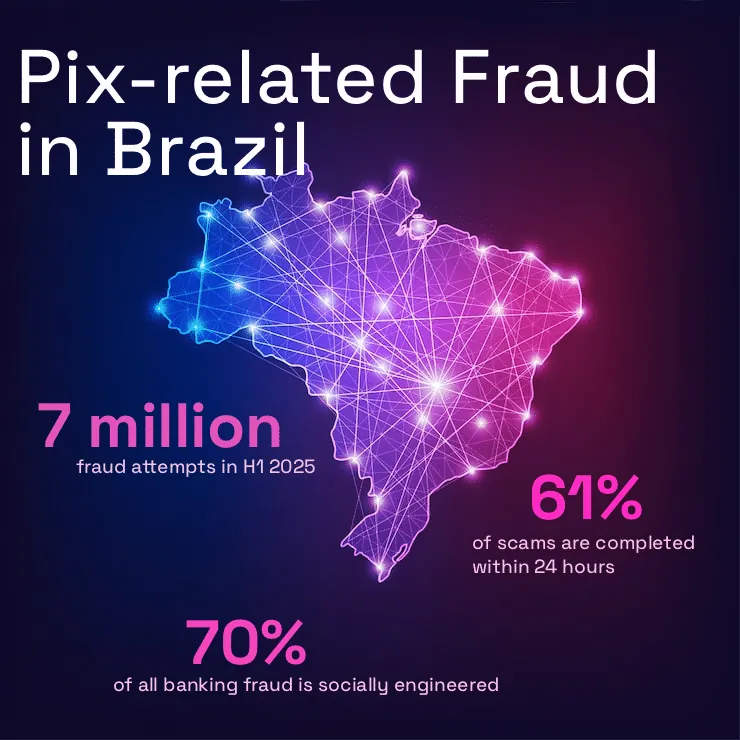
Pix has been held as the A2A gold standard. And yet, Pix-specific fraud losses reached an estimated R$6.5 billion in 2025. Only 9% of stolen Pix money is recovered according to the BCB. And roughly 70% of all fraud losses are purported to come from social engineering scams — indicative of organised crime groups using the rail for laundering at scale.4
So far, A2A hype is treating UPI and Pix as proof that removing card-network friction is an unambiguous win. Card-network fraud is heavily insured and chargeback protected, but present A2A payments sit on an irreversible rail.
The features that make A2A payments networks desirable (speed and finality), also makes fraud crime easy and scalable. UPI and Pix have forged ahead despite this risk and are still working to develop appropriate recovery processes.
At time of writing, both UPI and Pix – as well as European organisations like Britain’s UKPI, are developing protective anti-fraud liability frameworks: however, RTPs still operate on a principle of finality.
As the industry progresses, we must exercise caution in the face of the RTP payments hype. Success remains a balancing act between mandates and regulation, with much to be done to ensure consumers and businesses are protected as RTPs scale and become more complex.
The next article in this series will look at measures being taken in Brazil, India and the UK to make RTPs more secure – and why cards will be around for a long time yet…
Sources
1 https://www.openbanking.org.uk/wp-content/uploads/Open-Banking-Payments-and-Fraud-Monitor-June-edition-2026.pdf
2 https://www.business-standard.com/finance/personal-finance/upi-now-powers-85-of-payments-as-indians-ditch-debit-cards-rbi-data-126051900409_1.html
3 https://www.localcircles.com/a/press/page/upi-fraud-complaint
4 https://scamwatchhq.com/brazil-scams-2026-pix-fraud-phantom-hand-pcc/